Eastern Regional Referral Hospital
ཤར་་ཕྱོགས་ལུང་ཕྱོགས་གཙོ་བསྟེན་སྨན་ཁང་།
Eastern Regional Referral Hospital: Mongar Bhutan
Menu

Menu

Department of Emergency Medicine and Emergency Medical Services (EMS)
The emergency department (ED) is a core clinical unit of a hospital. The experience of patients attending the department significantly influences patient satisfaction and the public image of the hospital.
Its function is to receive, triage, stabilize and provide emergency management to patients who presents with a wide variety of critical, urgent and semi urgent conditions. The department also provides first line care in the management of disaster patients.
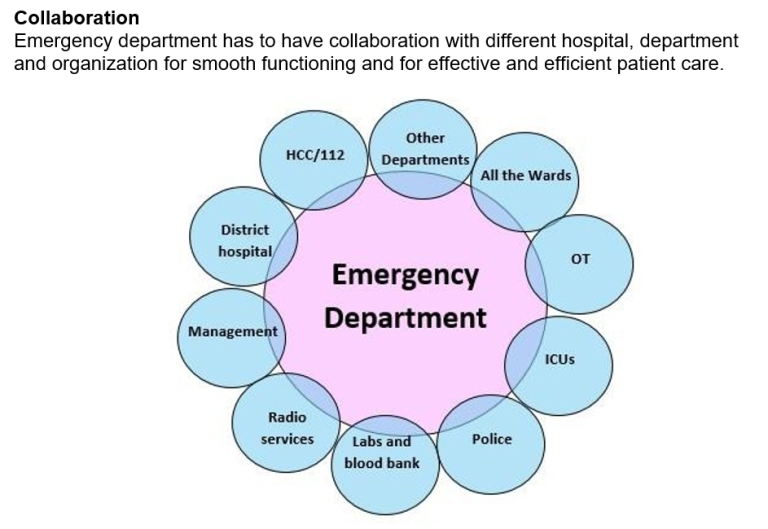
Established in 2008, the department consists of a team of Emergency Physician (EP), General Duty Medical Officers (GDMOs), clinical nurses, staff nurses, Emergency Medical Responders (EMR) and supporting staff. This team is available twenty-four hours a day and seven days a week.
Emergency Care includes adult medical and pediatric resuscitation, trauma resuscitation, toxins and overdoses and the treatment of minor urgencies. Resuscitation and critical care including but not limited acute coronary artery disease, acute stroke, sepsis, acute abdominal pain, bronchial asthma/COPD, toxic ingestions and trauma.
All patients who present to the Emergency Department are triaged according to seriousness of their conditions into three levels of triage [Red (1), Yellow (2), Green (3)], which allows the emergency team to give priority to life-threatening conditions.
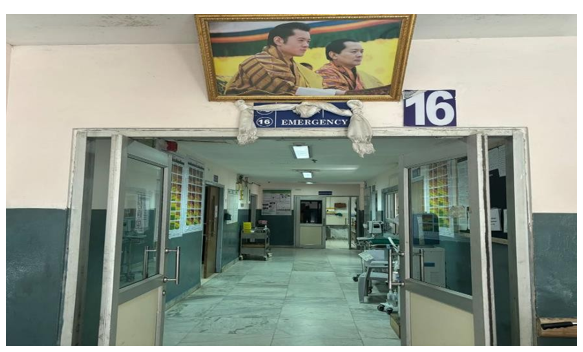
Department Unit
Clinical Services Units in the department are:
1.1. Triage Area
Every emergency department has a triage or triaging area to sort incoming patients. Triage can be defined as the prioritization of patient care based on the severity of injury / illness, prognosis, and availability of resources. For those responsible for the triage of patients arriving in the emergency department, the purpose of triage is to determine to which pre-designated area the patient should be sent. Triage of every patient coming to ED where the “waiting time to be seen” by an ED doctor is based on the individual medical condition of the patient. We categorize all patients presenting to ED into three Priorities.
- P1 (Red) seen immediately in Resuscitation Are
(Examples: Airway compromise, tension pneumothorax, shock, cardiac arrest, seizures, etc.)
- P2 (Yellow) seen within 30 minutes in AMC
(Examples: Limb injuries, lacerations with hemorrhage controlled, high fever, altered sensorium, and severe pain)
- P3 (Green) seen by 60 minutes or more.
(Examples: Sore throat, abrasions and superficial lacerations, chronic self-limiting disorder)
1.2. Resuscitation Unit
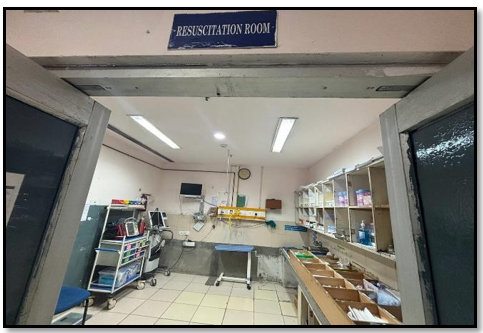
This area is dedicated to the immediate care of patients and victims in cardiac arrest, airway, and breathing and circulation compromise. The ‘Resus’ area consists of one adult and one pediatric bed with all resuscitative equipment (monitors, defibrillators, airway, intubation & surgical equipment). All priority patients are managed here.
1.3. Acute Care Unit
Patients, who are sick and non-ambulant requiring urgent care will be triaged here. They will be triage here and are required to be seen within 30 minutes. All priority II patients are managed here. Majority of the ED admitted patients are assessed and managed here.
1.4. Observation Area
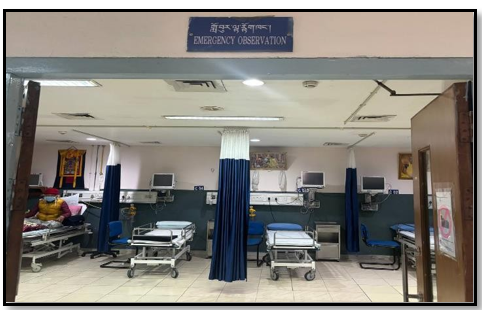
Patients requiring observation are kept here
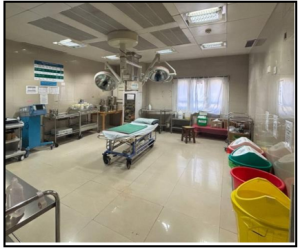
1.5. Procedure Room
Both major and minor procedure are done in this area. Major procedure includes central line insertion, HD line, intercostal tube and reduction of fracture and dislocation with procedure sedation. The area is equipped with monitor, oxygen, and suction and airway equipment for any procedure related complications. Minor dressing and suturing is all done in this area.
1.4. Consultation room/ Green Area
Here the walk-in ambulatory patients who need minor care and can be sent home are seen. They are P3 patients, waiting time being 60 minutes or more
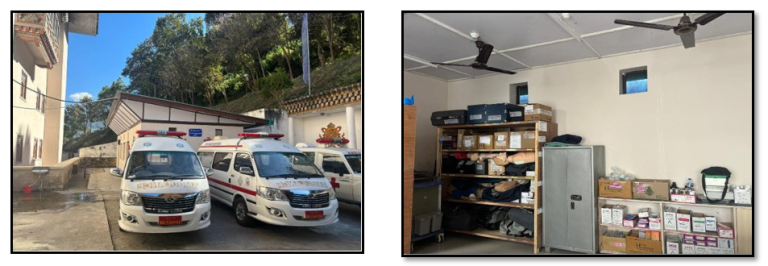
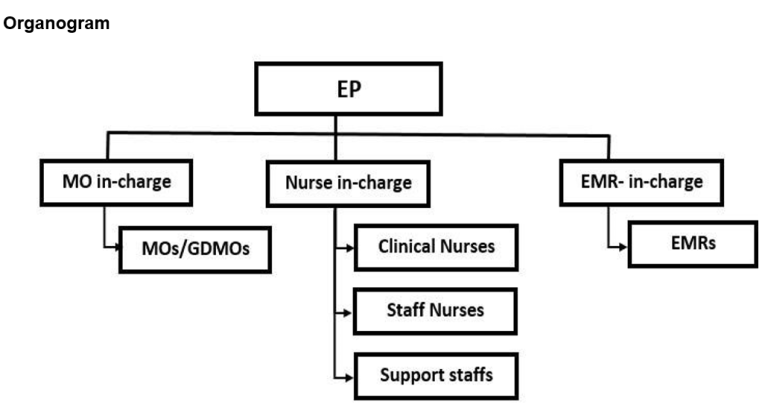
1.5. Emergency Pre-Hospital Care
This is manned by Emergency Medical Responder and they respond to ambulance call with basic pre-hospital Care.
Services available
- Acute Adult medical care
- Acute Pediatric care
- Trauma care and resuscitation
- Toxins and drug overdose management
- Emergency imaging and labs
- EMS and Rapid response team
- Forensic evaluation and reporting
- First Aid training
- Minor OT and procedure room
- PEN HEARTS NCD screening and Counselling
Way forward
- Increasing Emergency Physician coverage
- Improving human resources with more dedicated doctors and staffs
- Expansion and remodeling of department to improve the patient care
- Procure better equipment, separate minor and major procedure rooms, dedicate triage area, make patient counseling, isolation room and waiting rooms; and expand observation and acute care unit.
- Improve Emergency Department Information System
- Improve on emergency diagnostic and laboratory services
- Improve EMS services by increasing the numbers of EMRs, and collaborate with BEAR team
Mongar Regional Referral Hospital
- Mongar, Eastern Bhutan
- (+975)(04)641354 / 641549 / 641372 / 641112 / 641490
- mrrh@mrrh.gov.bt
- OPD →Mon – Fri: 9:00 – 15:00; Sat: 9:00-13:00
- Emergency →24/7 hrs
Online System
Copyright © 2025 - ERRH\Developed by WONS