
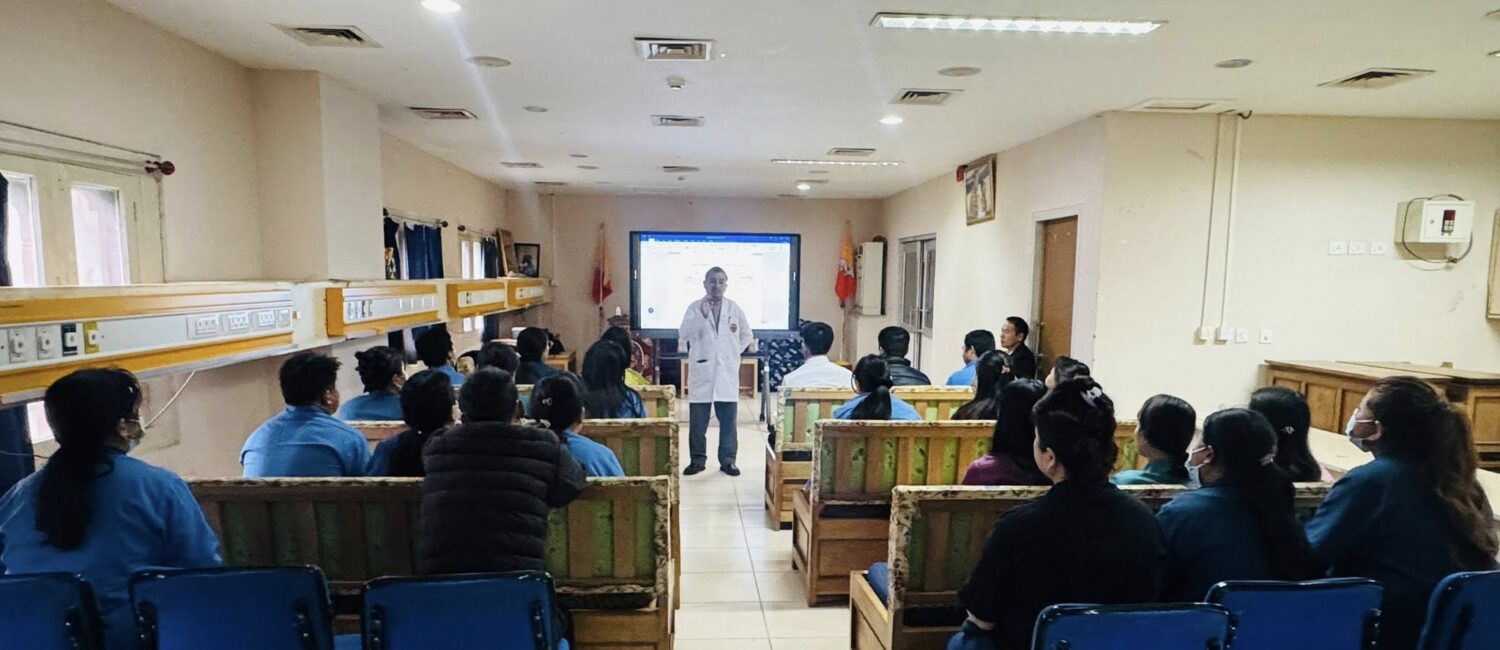
The Antimicrobial Stewardship (AMS) team conducted a training and sensitization program on Multidrug-Resistant Organisms (MDRO) Guideline, Sepsis pathway, infection prevention and control (IPC), and healthcare-associated infection (HAI) surveillance. The training was organized in several batches to ensure maximum participation without disrupting hospital services.
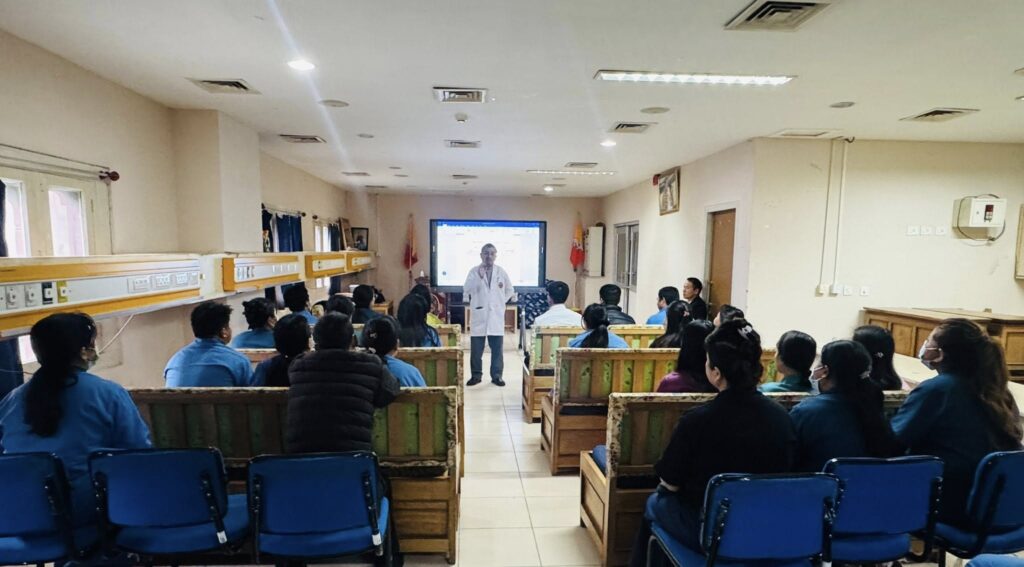
A total of 60 support staff were trained in two batches of one-day sessions, while around 100 clinical staff including doctors, nurses, pharmacy and emergency personnel were trained in three batches of two-day training from 27th February to 7th March 2026. A trained members from the AMS Team facilitated training sessions which was funded by Fleming Fund Project under the Ministry of Health.
The emergence and spread of MDROs, particularly carbapenem-resistant organisms (CRO) pose serious risks to patient safety, as these pathogens are difficult to treat and can rapidly spread within healthcare facilities. The training therefore focused on strengthening healthcare workers’ understanding of MDRO risks, the importance of early identification, the need for isolation and strict adherence to IPC measures to prevent transmission.
The participants were also sensitized on the first edition of national MDRO guideline, revised surveillance protocols for healthcare-associated infections and reporting, and the role of antimicrobial stewardship in reducing unnecessary antibiotic use that contributes to antimicrobial resistance.
A major component of the training highlighted and emphasised on the roles and responsibilities of healthcare professionals in the isolation and management of MDRO/CRO cases, implementing appropriate transmission-based precautions, ensuring timely screening and reporting, proper sample collection, and maintaining strict hand hygiene, environmental cleaning practices, teamwork among various staff to effectively contain the spread of resistant organisms and improve patient outcomes.
The training strengthened the capacity of healthcare workers to manage MDRO/CRO cases responsibly while promoting a culture of safety and accountability within the healthcare setting.